Pamanday, or blacksmithing, is a traditional craft practiced by skilled artisans in Sibalom, Antique. The primary tools used by blacksmiths include mallets, anvils, and grinders. The process involves heating metal, usually from leaf springs, shaping it with a mallet, and sharpening it using a grindstone. Blacksmiths also add aesthetic touches to their work, particularly to bolos, often crafting handles from carabao horns shaped into dragon heads. The craft has been passed down through generations, the craft continues to thrive, producing bladed weapons such as bolos for both local use and broader markets, including in online markets. Historically, blacksmithing served to supplement farming, providing further income for the family, albeit only a few engage in the craft. The practice faces challenges as the number of active blacksmiths is declining with younger generations pursuing other job opportunities and alternative careers.
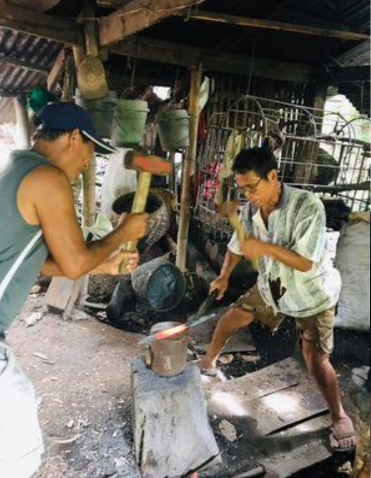
Photo Credit/s:
Alagos Blacksmith, Bongbongan II, Sibalom, Antique
Mappers:
ALEJANDRO G. ARTUS, JR.
Tags:
blacksmith craft, blacksmithing as cultural heritage, blacksmithing as livelihood, blacksmithing as supplemental livelihood, blacksmithing in rural communities, bolo production for local and broader markets, bolos crafting, carabao horn handles, challenges of modernity in traditional crafts, cultural preservation through blacksmithing, decline of blacksmithing craft, dragon's head bolo designs, family income through blacksmithing, Filipino artisanal craftsmanship, , Filipino rural artisan crafts, generational blacksmithing knowledge, grindstone sharpening, , mallets and anvils, online sales of traditional crafts, Pamanday, preserving traditional crafts, rural livelihood challenges, Sibalom Antique, traditional blacksmithing, traditional tools in blacksmithing, younger generations leaving blacksmithing
Want to know more?
Inquire about this specific heritage by filling up the form below.
We will get back to you with an answer as soon as we can.