The wooden sculpture of San Martin de Tours, crafted in Spain and brought to Barangay Sinogbuhan in 1886, is a revered Catholic icon estimated to be 138 years old. It depicts St. Martin as a cavalryman on horseback cutting his cloak for a beggar. To honor the sculpture’s arrival, the locals performed Sayaw, a traditional ritual war dance between Christians and pagans, to honor the saint who was once a warrior. A community story claims that St. Martin miraculously saved the village from Japanese invaders during WWII, further deepening his spiritual significance for the community. Every November 11, the saint’s feast day is marked with a procession and highlighted by the Sayaw. Though the sculpture faces deterioration and environmental threats, it remains central to Sinogbuhan’s religious identity, safeguarded by the parish and the religious organization, Legion of Mary.
SCULPTURE OF SAN MARTIN DE TOURS OF THE BRGY. CHAPEL OF SINOGBUHAN IN SAN JOAQUIN
Location/s:
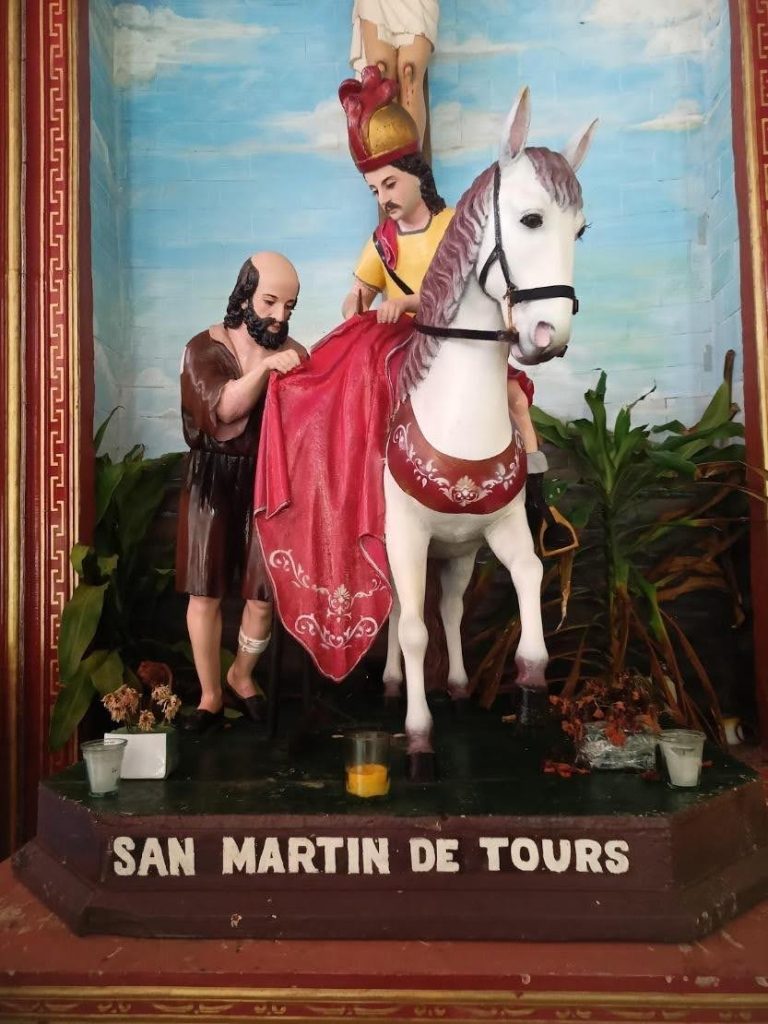
Photo Credit/s:
Felicio, Stella M. (2024)
Mappers:
Stella M. Felicio
Tags:
1886 religious artifact, , Catholic patron saint devotion, community religious celebrations, cultural preservation Sinogbuhan, environmental threats heritage, Filipino Catholic heritage, historical religious practices, Legion of Mary guardianship, religious cultural tourism, religious procession Philippines, sacred sculpture conservation, San Martin de Tours wooden sculpture, Sinogbuhan community rituals, , spiritual identity Sinogbuhan, St. Martin feast day, traditional Sayaw war dance, war dance tradition, WWII local miracle story
Want to know more?
Inquire about this specific heritage by filling up the form below.
We will get back to you with an answer as soon as we can.