Salt making is practiced in the coastal barangays of Sebaste and Bubog in Sibunag, Guimaras, where residents use punungan or fishponds during the dry season, January until May, to produce salt. The practice in the barangay was said to have began in 1983 when Teofisto Vilchez converted his fishpond into an asinan to provide income and employment. At present, only Sebaste remained active in salt production, sustained by 39 workers in the Sebaste-Bubog Salt-Making Association. The process of salt production involves creating clay boxes (kahons) and filling them with seawater. Once the salt has dried and crystallized, it is harvested using a plastic tool called kagot. The salt produced is categorized into Class A (super white), Class B (segunda), and Class C (used for preservation and fertilizer). Since the first salt makers, the practice continues to be passed down informally from generation to generation and the tradition endures despite challenges of unpredictable weather and potential environmental concerns related to the materials used.
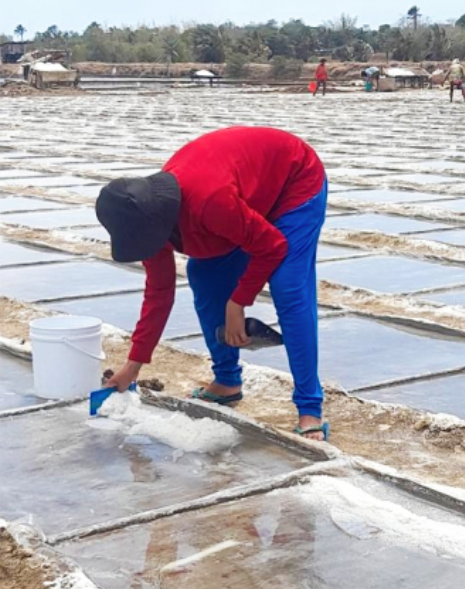
Photo Credit/s:
Hannah Mañero, 2024
Mappers:
Hannah R. Mañero,Adrian C. Alumbro,Alpha Queen G. Tayona,Lorena G. Amigable-Tourism Officer
Tags:
asinan, challenges in salt-making, Class A super white salt, Class B segunda salt, Class C salt for preservation and fertilizer, clay boxes (kahons) for salt production, , cultural heritage of salt-making, dry season salt production, environmental risks, fishponds, informal learning of salt-making skills, January to May, kagot tool for harvesting salt, local livelihoods from salt-making, Negrenses influence in salt-making, punungan, salt as a local commodity, Salt making, salt-making tradition, , Sebaste-Bubog Salt-Making Association, Sibunag Guimaras, Teofisto Vilchez, traditional salt production, weather conditions affecting salt production
Want to know more?
Inquire about this specific heritage by filling up the form below.
We will get back to you with an answer as soon as we can.