Nito weaving, known locally as Pagtahi it Nito, is a traditional craft practiced in Bagong Barrio, Makato, Aklan, using vines from a local plant to create various woven items. It is mainly done by women but supported by men and children who help in harvesting the vines from the forest. Tools like the duk-eat (hook) and panghaeot (dagger) are used to prepare and weave the strips, forming products such as baskets and coasters. The practice is both a livelihood and a social activity, where women gather to weave and bond, often passing the craft down to their daughters through observation. Nito weaving is significant not only for its economic and cultural value but also for its environmental role in managing the growth of the fast-spreading vine. However, the tradition faces challenges as younger generations show more interest in digital technology than in preserving this heritage.
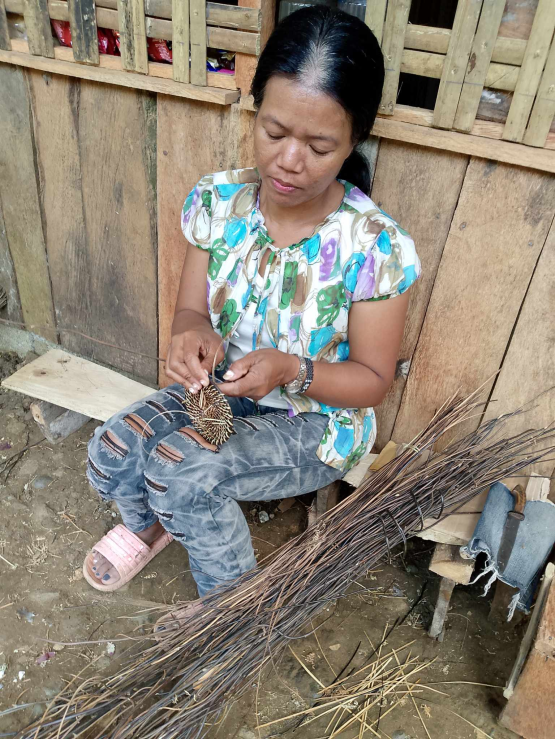
Photo Credit/s:
Romnick Taladro, 2024
Mappers:
Romnick T. Taladro, Trixia Mae S. Regalado, Shayne Danica F. Agustin
Tags:
, craft bonding community, cultural heritage weaving, duk-eat tool, environmental vine management, Filipino vine weaving, Filipino woven coasters, handmade baskets Philippines, heritage craft challenges, indigenous weaving techniques, livelihood weaving craft, nito weaving, Pagtahi it Nito, panghaeot dagger, passing down weaving skills, preserving Filipino traditions, rural Filipino crafts, traditional craft preservation, traditional weaving Aklan, , women artisans Philippines
Want to know more?
Inquire about this specific heritage by filling up the form below.
We will get back to you with an answer as soon as we can.