The Galingan nga Bato ni La Meren from Brgy. Igbalangao, Bugasong, is a traditional stone grinder used for grinding grains like corn and rice. It consists of two white stones: the base stone “Laki” (male) and the upper stone “Bahi” (female), with a wooden handle and axle made from sibukaw wood, a local tree. This stone grinder is an essential tool for grinding grains both for animal feed and culinary uses such as making traditional rice cakes. The galingan holds a cultural significance within the community, as it symbolizes a time when mechanical tools were rare. It also reflects the community’s social bonds, as only community members with a degree of social closeness with the owner can borrow the galingan. Despite its present fragile condition, the galingan is valued for its rarity, craftsmanship, and potential for showcasing the ingenuity of past generations.
Location/s:
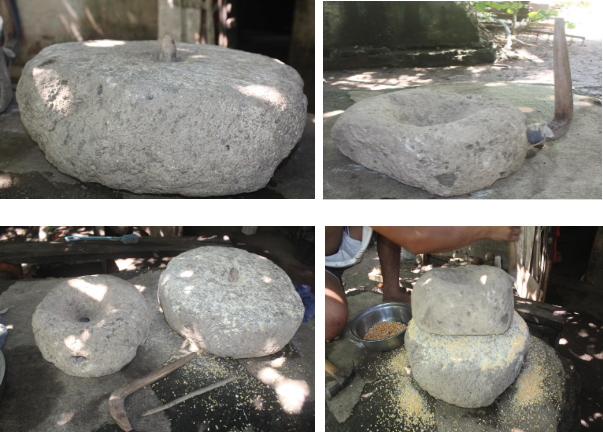
Photo Credit/s:
Glenn Pon-an, 2021
Mappers:
GLENN PON – AN – Southern Bugasong National High School,,CLAVIL FORTALEZA – Antique Vocational School,,MAYFE OGATIS – Antique Vocational School,,GLORI PEARL QUIA – ONG – Antique Vocational School
Tags:
1963, animal feed, base stone "Laki", borrowing tradition, Brgy. Igbalangao, brittleness, Bugasong, chips, community bonding, community resource, corn, craftsmanship, culinary uses, Cultural Heritage, daily life tool, fragile condition, Galingan nga Bato ni La Meren, grinding grains, ingenuity, Jelo Canja, Lolito Natan, Lolo Dikong, male and female stones, Marina Natan, mechanical tools, past generations, rarity, rice, rice cakes, sibukaw wood, , traditional snacks, traditional stone grinder, two white stones, upper stone "Bahi", wooden handle
Want to know more?
Inquire about this specific heritage by filling up the form below.
We will get back to you with an answer as soon as we can.