Sinamak nga Pinya is a traditional pineapple-infused vinegar made in Barangay Agtambo, Passi City, using locally grown pineapples and spices like garlic, ginger, and chili. The craft dates back to the 1930s when pineapple farming began in the area, and locals created sinamak to reduce waste and enhance their dishes. The condiment is widely used in households, especially paired with dried fish, and is often stored in reused glass bottles. Both men and women, typically aged 15 and up, learn the practice through observation and hands-on experience with elders. However, its production depends on pineapple availability and is not always seen as a major income source, though families continue to pass it down informally to preserve it.
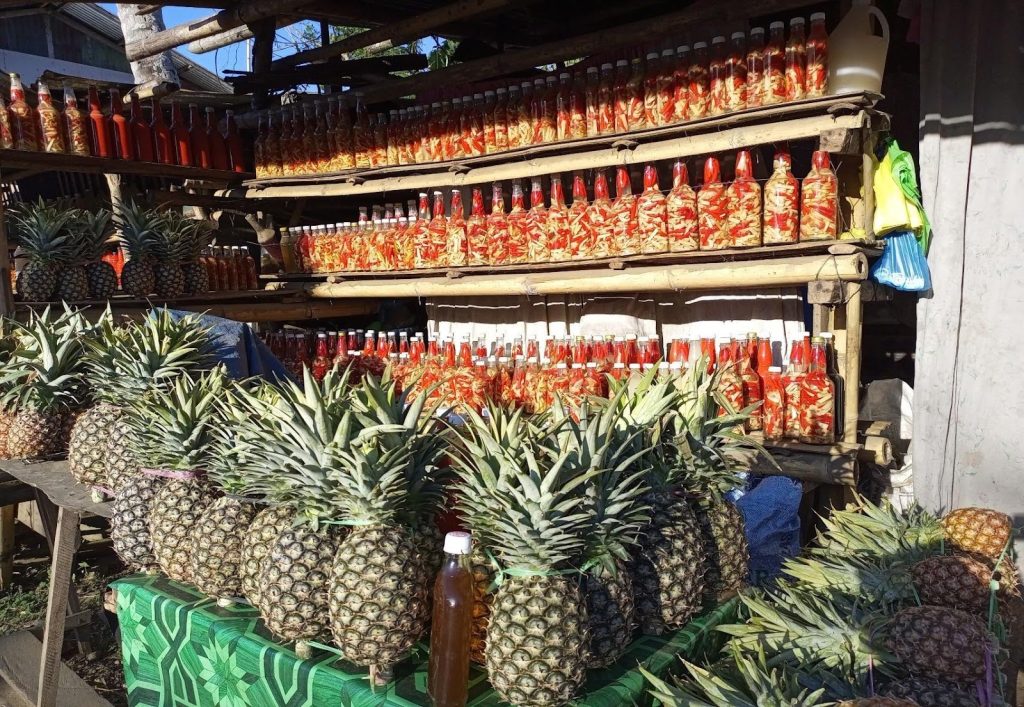
Photo Credit/s:
Palmares, Ma Ruffa L.
Mappers:
Ma Ruffa L. Palmares, Jay Delideli
Tags:
1930s origin, , Cultural Preservation, family tradition, garlic ginger chili spices, hands-on practice, household use, informal knowledge transfer, intergenerational learning, local condiment, non-commercial production, paired with dried fish, Passi City, pineapple availability dependence, pineapple farming, pineapple vinegar, reuse of glass bottles, Sinamak nga Pinya, traditional vinegar
Want to know more?
Inquire about this specific heritage by filling up the form below.
We will get back to you with an answer as soon as we can.