Pagpanulo, or night gleaning, is a traditional practice in the coastal barangays of Igcawayan and Suclaran in San Lorenzo, Guimaras, where people catch various shellfish and small fishes during low tide at night. Originally, gleaners used bamboo torches (sulo), later replaced by kerosene-fueled gauze lamps, and now flashlights or headlamps for better lighting. The tools they use include bolos, knives, and any type of a container to collect species like shrimp, crab, and various fish, which are either consumed or sold for income. This activity is best done during the habagat season when rivers overflow. The practice is passed down without formal training as children typically learn by observing and assisting their parents. Despite facing challenges like loss of interest among the youth and safety concerns, pagpanulo remains an important cultural practice in San Lorenzo.
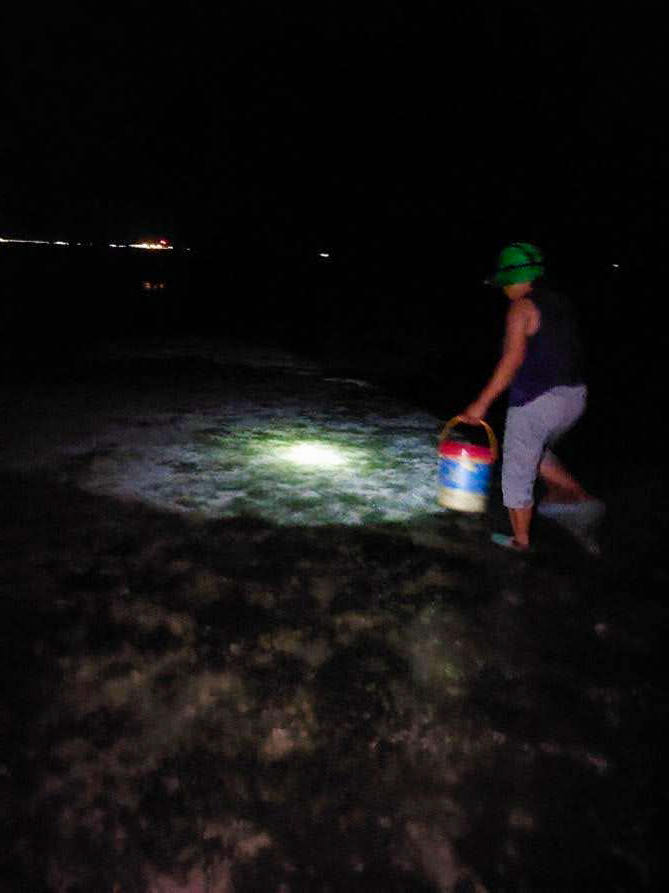
Photo Credit/s:
Guimaras State University Cultural Mappers, 2024
Mappers:
Hannah Mañero,Alpha Queen Tayona,Amy Ross Gamarcha,Ethel Junco - Study Leader,
Tags:
bamboo torches for lighting, bolos and knives for gathering, challenges in maintaining traditional practices, children learning pagpanulo, , coastal community traditions, collecting fish, collecting shrimp and crabs, family-based cultural practices, flashlights and headlamps, habagat season and gleaning, informal learning of pagpanulo, local income through gleaning, loss of interest in traditional practices, low tide gleaning, marine invertebrates collection, night gleaning, Pagpanulo, Petromax lamps for lighting, preserving cultural traditions in San Lorenzo, rivers overflowing, safety concerns in night gleaning, San Lorenzo Guimaras, seafood gathering practices, traditional practice
Want to know more?
Inquire about this specific heritage by filling up the form below.
We will get back to you with an answer as soon as we can.