Pang-asin nga bud-bud is a traditional practice of making salt in several coastal barangays of Pantongon, Antique. The process involves several steps, from constructing a salimbuwang, a filtering box to drain seawater, to storing the brine in a kam-aw or clay container, and drying the brine in lata or bamboo nodes under the sun. After a few days, salt is then harvested through the karagot. Salt made through bud-bud provides a subtle yet unique flavor profile. The practice is typically passed down through generations, with children learning by helping their parents. More than an important source of income, it is part of the community’s heritage. However, climate change poses a challenge as the unpredictability of weather greatly affects its production.
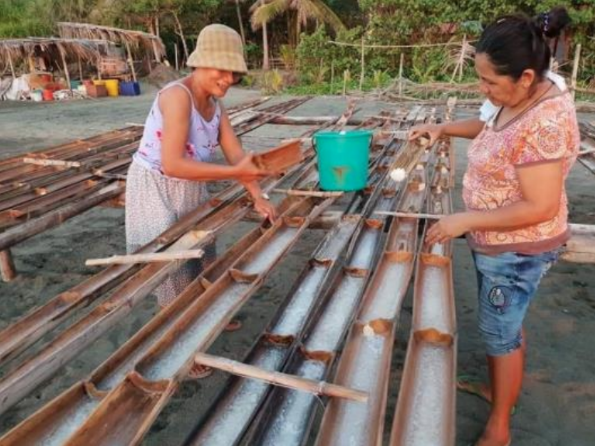
Photo Credit/s:
MENRO Patnongon
Mappers:
Jay Ann M. Cantong,Kimberly Faith P. Baladiang,Jan Mark D. Gumawa,Ma. Elvira R. Opiňa,Nerilyn M. Norella,Jarnel D. Flor,Rock Jennifer M. Gertos,John Mark B. Gordon
Tags:
Apgahan, climate change impact on salt production, , coastal community traditions, community-based livelihood, , Filipino coastal livelihood, Filipino salt-making traditions, folk food production techniques, generational salt-making knowledge, Kam-aw clay container, karagot salt harvesting tool, , learning salt-making informally, local salt flavor profile, mineral-rich salt, Padang, Pang-Asin nga Bud-Bud, Poblacion, Salimbuwang filtering box, salt production as income, salt production from seawater, salt-making as family tradition, seawater filtration process, Sitio Baybay, sustainable salt-making practices, traditional Filipino salt making, traditional food processing, unpredictable weather in salt harvesting, unrefined salt harvesting
Want to know more?
Inquire about this specific heritage by filling up the form below.
We will get back to you with an answer as soon as we can.