Pagpamanday, or blacksmithing, is a traditional craft practiced in Barangay Lanipe, Nueva Valencia, Guimaras, passed down through generations. The process involves using scrap materials, typically from jeepney muelle, which are heated, shaped, and sharpened into tools like binangon, knives, and plows. Blacksmiths, or manugpamanday, use an anvil, hammer, and sanding machine to shape the material, grinding and polishing it, before quenching it in water to ensure durability. The craft is a significant source of livelihood for local families and is actively practiced by men typically aged 30-65 in the community. Knowledge of blacksmithing is transmitted informally through apprenticeships, where younger family members learn from their elders. Despite challenges like the cost of materials, including scrap metal and charcoal, the craft remains a vital part of the cultural heritage and the local economy of Nueva Valencia.
Location/s:
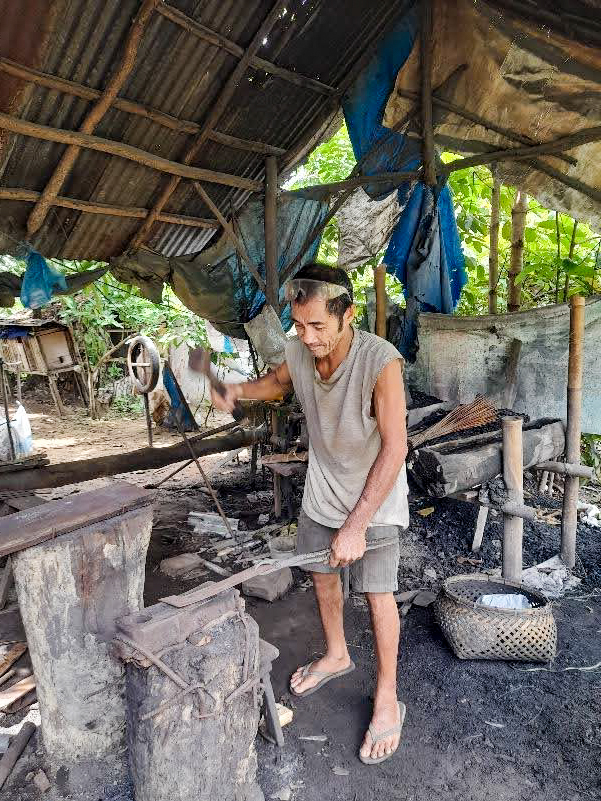
Photo Credit/s:
Mañero, Hannah (2024)
Mappers:
Hannah Mañero,Gilly Jay Talaban,Ethel Junco- Study Leader
Tags:
anvil and hammer use, , binangon knives and plows, blacksmithing, blacksmithing apprenticeships, blacksmithing as local economy contributor, blacksmithing tools in Nueva Valencia, blacksmiths in Guimaras, challenges in blacksmithing, charcoal for blacksmithing, community blacksmithing traditions, cost of materials in blacksmithing, cultural heritage of blacksmithing, family traditions in blacksmithing, grinding and polishing tools, informal apprenticeship in blacksmithing, local livelihood through blacksmithing, manugpamanday, men blacksmiths aged 30-65, Pagpamanday, preserving blacksmithing practices, , , scrap materials for blacksmithing, , shaping and sharpening tools, sustaining traditional crafts in the Philippines, traditional craft
Want to know more?
Inquire about this specific heritage by filling up the form below.
We will get back to you with an answer as soon as we can.